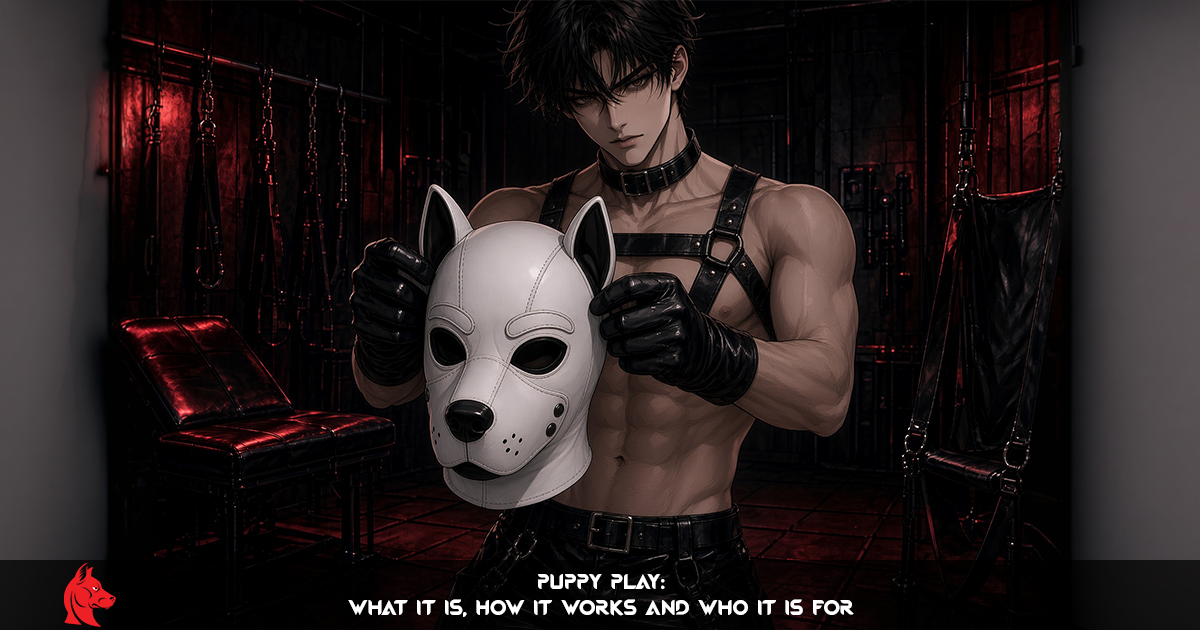
Puppy play is a form of role play in which one or more participants voluntarily take on the manners and the behaviour of a dog. It has grown up largely inside the gay community, which has done more than any other to popularise it and to make it ordinary, and it offers something that is genuinely hard to find elsewhere: a space where a person can put down the adult they are expected to be all week and simply play.
The practice is widely misread. Outsiders assume it is only about sex, or only about submission. It is neither of those things exclusively, and it is usually a good deal more. What follows sets out what it involves, what the roles mean, and where the boundaries sit.
What puppy play actually is
A role, not a performance
At its simplest, puppy play means moving on all fours, playing with toys, communicating without words and responding on instinct rather than on reason. Some people do it alone at home for twenty minutes after work. Others build a large part of their social life around it.
The point outsiders miss most often is that this is a role taken on for its own sake, not a show staged for an audience. It is closer to a state of mind than to a costume, which is why two people wearing exactly the same gear can be doing two completely different things.
Social, sexual, or both
Puppy play is not limited to a sexual dimension. It is first of all a social and emotional experience that lets participants reconnect with something instinctive and, for a while, simplify what they want and why they want it.
The largest study to date, a community survey of 733 puppy play participants published in the Archives of Sexual Behavior in 2022, asked people to place their own practice on a scale running from entirely social to entirely sexual. The average landed almost exactly in the middle, and just under half put themselves at the precise midpoint. Both readings are true at once, and the balance is a personal matter.
Roles and ranks in puppy play
Handlers, trainers and masters
When a puppy play session includes a dominant role, it can be held by a Handler, a Trainer, a Master, or by another pup who identifies as an alpha. Whatever the title, the substance is the same: guiding the pup, keeping an eye on them and looking after them for the duration.
That responsibility is real, and it does not end when the session does. A handler who has held someone’s full attention for two hours has work left to do afterwards, which is why aftercare matters as much to the person leading as to the one following.
Alpha, beta and omega
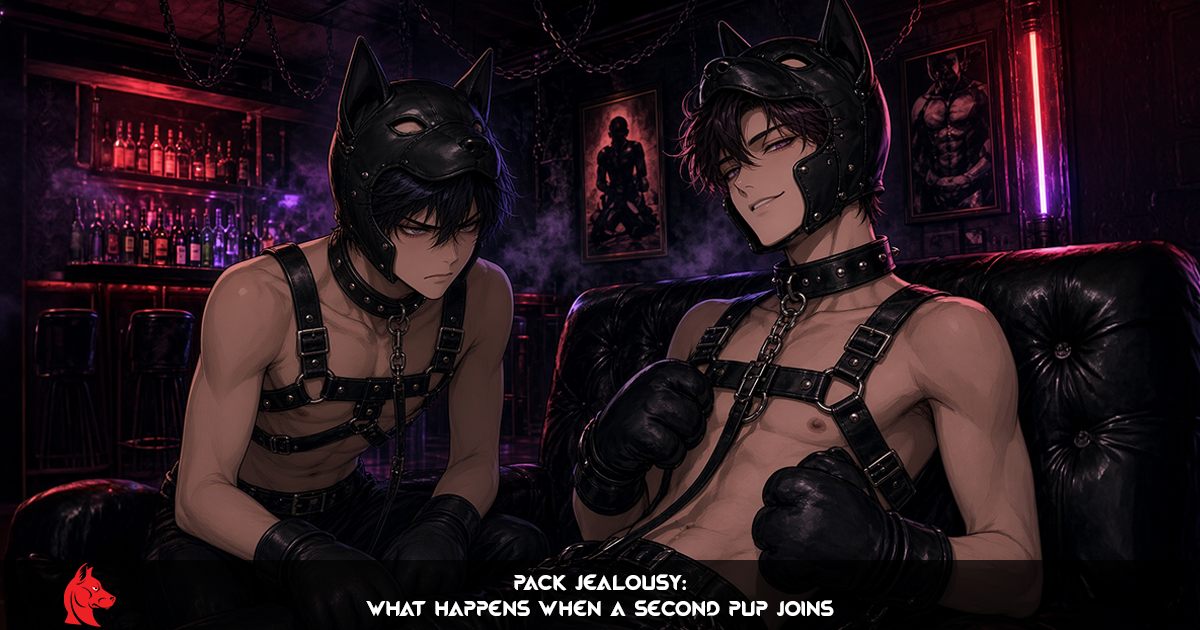
Not every pup is an alpha. As in the canine hierarchy, some see themselves as beta or omega, and each position reflects a different way of behaving.
A beta generally describes someone with both dominant and submissive tendencies, or someone oriented towards service. It is an intermediate position, and it leaves a great deal of flexibility in how a pup relates to others. An omega points to a more submissive and playful nature, service-oriented, often happiest when guided and cherished by a handler or by an alpha.
How pups play together
Play between equals
Unlike most other forms of animal role play, it is entirely common for two or more pups to play together on an equal footing, with no handler involved at all. Those interactions range from wrestling to settle who is in charge, to moments of pure complicity, to games where one of them naturally slips into the alpha role and the others let him.
Reading another pup correctly is part of the pleasure, and most of that reading happens through body language rather than words.
Events and the gay scene
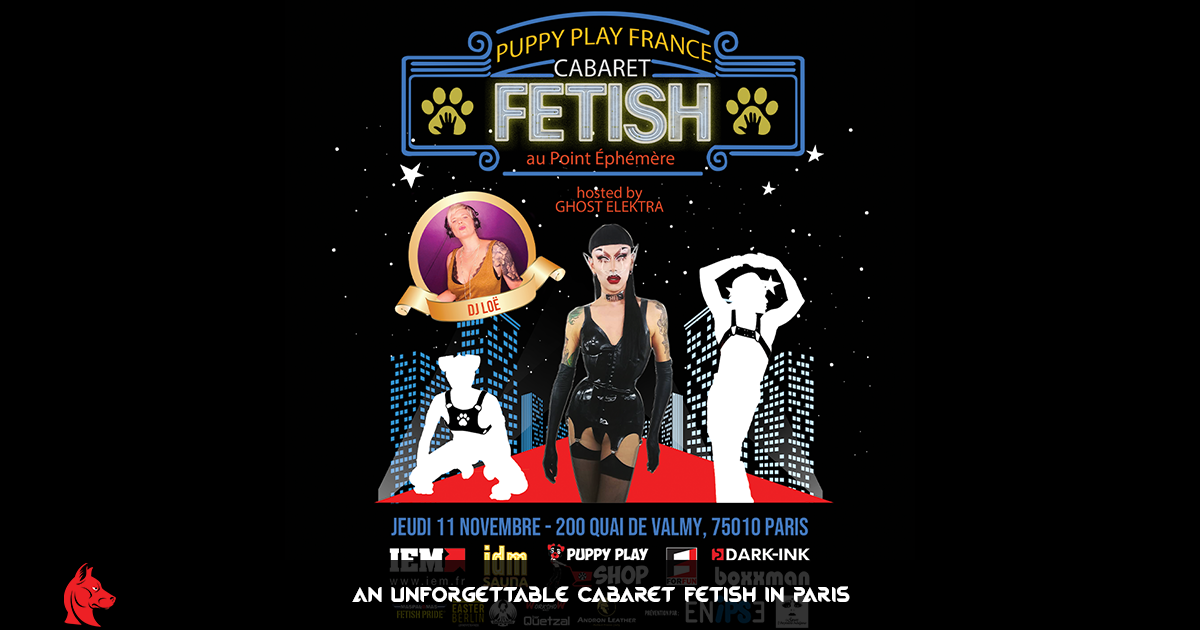
A large part of puppy play is social, and it happens in public. Groups gather at events organised for them all over the world. There, human pups behave like the animal they are playing: they relax, chase a ball, and interact with other pups and with handlers in an atmosphere that is deliberately caring and free of judgement.
For a newcomer, that first event is the intimidating step, far more than the gear is. Anyone in that position will find the scene more welcoming than expected, as new pups consistently report.
Pup space, and the gear that supports it
What pups describe as pup space
Many pups reach a particular mental state during puppy play, known as pup space. It is what lets them take on the puppy personality more easily and set down, for a time, the constraints and the responsibilities of daily life.
Being in that state usually means being playful, mischievous, cheeky and instinctive. It is a form of escape, explored in a setting that is safe and consensual. In the language borrowed from BDSM, a pup with no owner and no collar can be described as a stray, free to explore and to interact entirely on his own terms.
Collars, hoods, knee pads and mitts
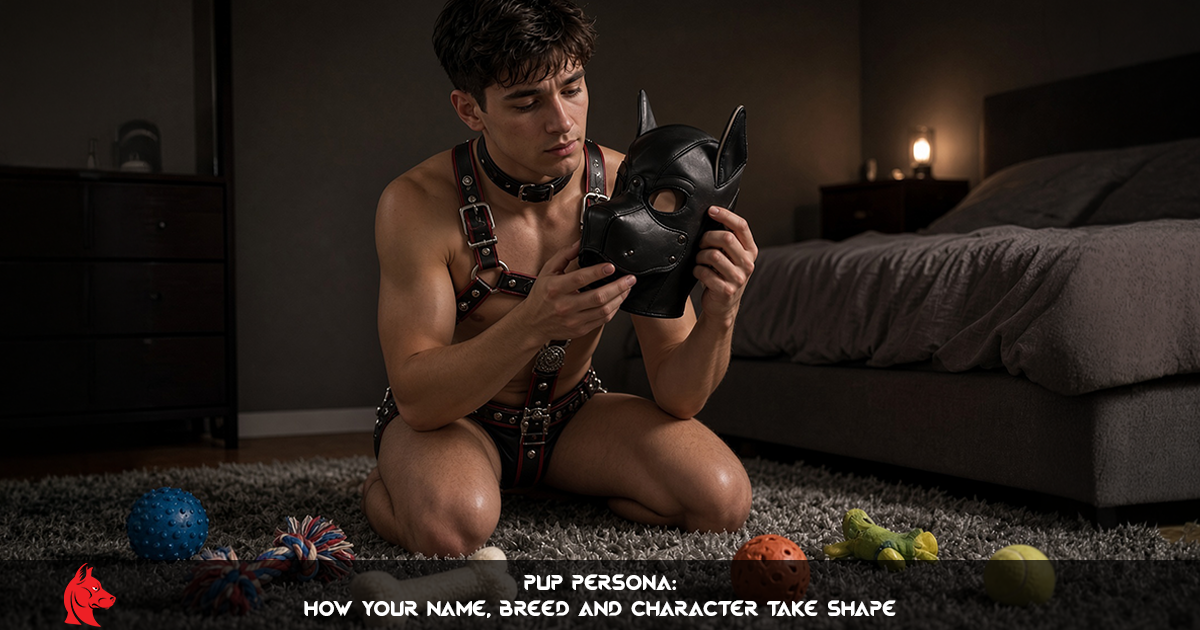
Gear supports the role rather than creating it. Collars and leashes stand for the bond between a pup and a handler. Knee pads protect the knees of anyone who spends real time on all fours. Harnesses accentuate the canine look and make handling easier. Rubber suits serve total immersion. Hoods are not necessary, but they help hold pup space and carry a pup’s own identity. Mitts protect the hands and take the fingers out of use, which makes the whole thing more convincing.
None of it is compulsory. Plenty of people start with nothing at all, or with a collar borrowed for one evening.
Consent and communication
Whether a session includes sex or not is a decision to be made in advance, between the people involved, so that nobody has to guess. Informed consent and clear talk are the foundation of puppy play, and everything else rests on them. That conversation covers what will happen, what will not, and how either person stops it, which is what a safeword is for.
Training can be part of it, teaching rules and tricks, when both people want that kind of interaction. Approached that way it builds trust and makes the experience better for everyone. Imposed rather than agreed, it does the opposite.
What puppy play is not
Five things it is not
Several persistent ideas need clearing up. Pups are not always submissive. They are not always passive. They do not always need a trainer. The colours they wear do not refer to the hanky code. And they are not always in a sexual frame of mind.
Nor is any of this a political statement, and it is emphatically not zoophilia: the participants are consenting adults playing a role with each other. Above all, puppy play is about fun and about freedom, which is exactly what the stereotypes leave out.
When play stops being play
The practice is good for a great many people. In the 2022 survey, most participants said it had improved their mental health, though the authors were careful to note that a self-reported benefit is not a treatment and should not be read as one.
The line worth watching is a simple one. Play that is chosen, that has a beginning and an end, and that a person can walk away from is healthy. Play used to avoid something, that cannot be stopped, or that leaves someone feeling worse each time is a signal, not a failure. Anyone in that position is better served by a professional familiar with kink, who will not waste the first session being shocked.
Get in touch
I have been part of this scene for years, as a pup and alongside handlers, and I know how many questions people have before they dare ask a single one. If something here raised one, or if you want to talk about starting out, write to me on the contact page. No question is too basic, and nothing you send goes any further than me.