Human Pups: Why More People Are Owning the Identity
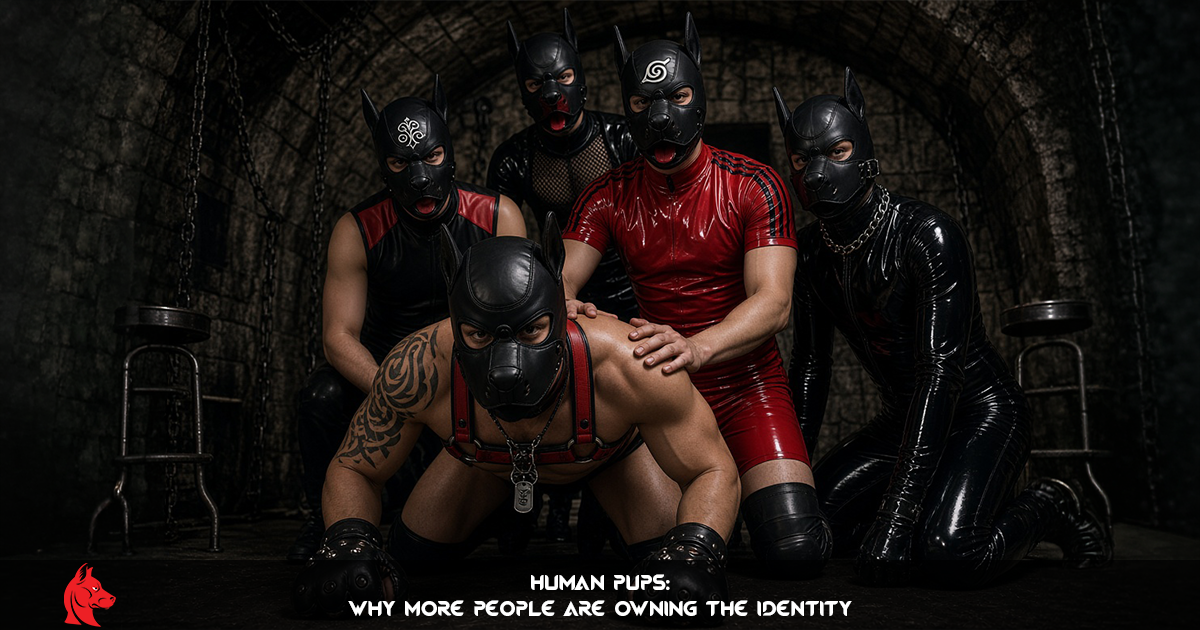
Human pups are no longer a curiosity whispered about at the back of a leather bar. Over the past decade, the people who slip into the role of a dog have built one of the most visible and welcoming corners of the fetish world, with packs, contests, meetups and their own contingents at Pride. What has changed is not really the practice. It is how openly people now claim it.
This article looks at what the identity involves, what researchers have actually found, and why more people are stepping forward.
What being a human pup actually means
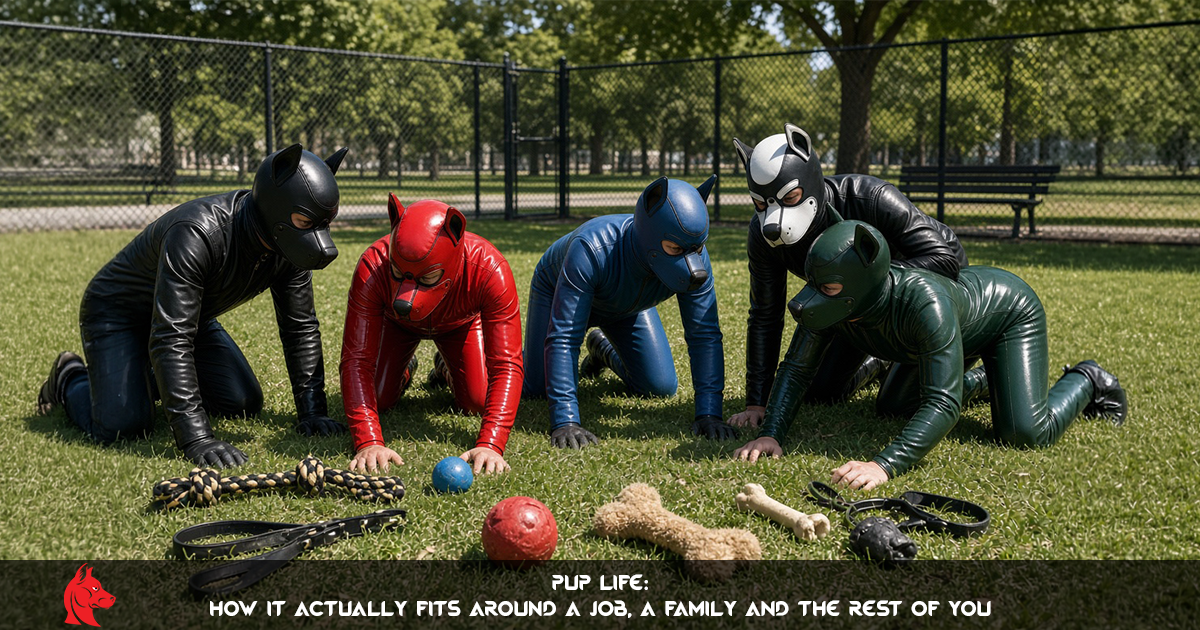
At its simplest, pup play means taking on the behaviours and the mindset of a dog: moving on all fours, playing with toys, communicating without words, responding to a handler. Some do it alone at home for twenty minutes after work. Others build a whole social life around it.
The point that outsiders miss most often is that this is a role, not a performance for an audience. It is closer to a state of mind than to a costume.
The headspace, explained
Most human pups describe a mental state they call the pup headspace: thinking stops, language goes, and what remains is instinct and play. Researchers who first documented the practice compared it to flow, that feeling of being fully “in the moment” that people also describe in yoga or running.
That comparison matters, because it explains the appeal far better than the gear does. A demanding job, a brain that will not switch off, a week of holding it together: dropping into the headspace is, for many, the fastest route out of all that.
Gear is a tool, not the point
Gear is nonetheless part of the culture, and it is close to universal. In a 2022 community survey of 733 participants published in Archives of Sexual Behavior, 90.9% owned gear, most commonly hoods and masks (81.9%), collars (78.4%), and harnesses or restraints (63.2%).
Newcomers often assume they need all of it before they can start. They do not. Plenty of human pups begin with nothing at all, or with a collar borrowed for an evening.
What the research actually says
Pup play went a long time without any serious study. That has changed, and the findings are more nuanced than the headlines suggest.
Social, sexual, or both
The lazy assumption is that this is simply a sex thing. The survey of 733 participants found something more mixed: 49% rated their own style of pup play as equally social and sexual, 24% as mostly sexual, and 14% as mostly social. In the earlier exploratory study of 30 human pups, 23 acknowledged a sexual dimension while 26 pointed to a strong social one.
In other words, both readings are true, and the balance is personal. A human pup who goes to a munch to make friends and one for whom it is entirely erotic are describing the same activity.
Wellbeing
The same 2022 survey reported that 84% of participants believed pup play had improved their general mental health, and that just under half had a mental health diagnosis of some kind.
That deserves care rather than enthusiasm. It shows that people find real value in the practice. It does not make pup play a treatment, and no serious researcher has claimed it is one.
Why more people are claiming the identity
The internet built the community
Nothing did more for this subculture than being able to find each other. In the early study, 26 of the 30 pups interviewed used Twitter, and one summed up the shift by saying it was simply the easiest way to do it now.
Liam Wignall, who has researched the scene since its first academic study and devoted several chapters of his 2022 book Kinky in the Digital Age (Oxford University Press) to it, makes the same argument at length: online communities turned isolated individuals into a subculture with its own history, vocabulary and norms.
From back rooms to the main stage
The second driver is visibility. The European Puppy and Handler Contest, held at the Darklands festival in Antwerp, has run since 2015 and reached its tenth edition in 2025. Its organisers frame it around visibility, education and empowerment rather than spectacle, and titleholders spend their year travelling to connect local communities.
Add the pup contingents that now walk at Pride marches across Europe, and the practical result is straightforward: someone curious today can see people like them, in public, having a good time.
Human pups, handlers and packs
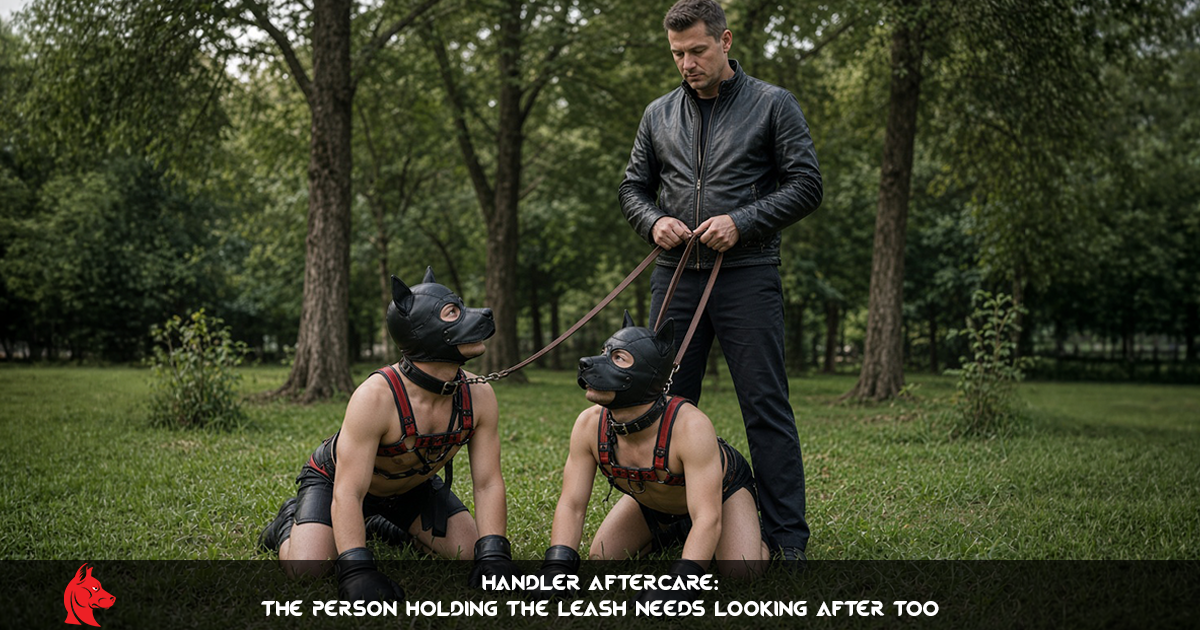
Not everyone in the human pup scene wears the collar. The 2022 survey found 71.9% identified as pups, 9.7% as handlers, and 18.4% as both depending on the moment. A handler is the human counterpart: the one who sets the boundaries, keeps an eye on water and breaks, and brings the pup back up at the end.
Identity work runs deep. In that same survey, 86.7% had chosen a pup name, and 54.8% identified with a specific breed. Packs form around affinity rather than rules, and the hierarchies inside them, alpha through omega, are usually far less rigid than the vocabulary suggests.
What human pups are not
A few misconceptions are worth clearing up plainly.
It has nothing to do with animals. It is humans playing at being dogs, with other consenting humans. It is not age play, which is a separate practice with a different dynamic. It is not always sexual, as the survey figures show. And it is not a rejection of adult life: most pups hold ordinary jobs and describe the headspace precisely as what makes the rest of the week bearable.
Coming out as a pup, or not
Early research found that most human pups kept the practice from friends outside the scene, largely to avoid awkward questions from family and employers. That caution has not disappeared, and it does not need to.
There is no obligation to be public about this. Plenty of people play at home, or only within the community, and are perfectly happy. Visibility has made the scene easier to find, but it has not made discretion a failure.
Starting out
If you are curious, the useful advice is short.
Begin with the headspace rather than the shopping. Gear can wait, and the good stuff is expensive. Go to a social event before a play event; most cities have a pup munch where nothing happens beyond conversation. Talk about limits with anyone you play with, before you play. And if you handle for someone, remember the unglamorous part of the job: water, breaks, and a soft landing when they come back up.
The human pup community has a reputation for being welcoming to newcomers. In this case, the reputation is deserved.
Sources: Wignall L., McCormack M., Cook T., Jaspal R., Findings From a Community Survey of Individuals Who Engage in Pup Play, Archives of Sexual Behavior, 2022 ; Wignall L., McCormack M., An Exploratory Study of a New Kink Activity: “Pup Play”, Archives of Sexual Behavior, 2015 ; Wignall L., The Social Life of Human Pups, Discover Society, 2016 ; Wignall L., Kinky in the Digital Age, Oxford University Press, 2022 ; European Puppy and Handler Contest / Darklands Festival, Antwerp.
For comments or projects, please contact me.